
Monday, April 9, 2012
THE QUANTUM *COMICS* BLOG!
Members and visitors to The Quantum Blog: I know there hasn't been a post for a long time, but I'm still here and have just opened an all-new Blog: Go now to the all-new QUANTUM COMICS BLOG at http://quantum-comicsblog.blogspot.com! Hope to see you there!

Tuesday, January 18, 2011
THE NEVER-ENDING END
In a couple of weeks we are going to see the end of the Fantastic Four.
Again.
2011 is the 50th Anniversary of (what was once called) “The World’s Greatest Comic Magazine!” and the pop-culture colossus of Marvel Comics that arose from it. Remember, the basis for everything Marvel is not Spider-Man or The X-Men; it is The Fantastic Four. Not that you would know it from the way people constantly treat the FF as an afterthought in the mighty pageant of Marvel heroes, or as if it’s just another comic book, but it’s true. To “celebrate” this half-century milestone, Marvel has opted to kill off one member of its founding quartet, end the Fantastic Four comic book as we know it (such as it’s been lately), and, come the spring, start a new comic book that is mysteriously being called only FF. If you were to ask me what this new “FF” stands for, I’d be inclined to tell you it stands for “Fake and Foul,” but let’s not get rancorous right now.

My basic reaction to all of this is pretty much a groan and a rolling of the eyes. This is hardly the first “end of the Fantastic Four;” it’s only the latest and most radical such occurrence in a long history of them. I’ve basically given up on what has historically been my favorite comic book. I haven’t bought it since the early part of 2009 and I have resigned myself to the possibility of never buying it again. You see, this is almost all that anyone who works for Marvel really can find to do with the company’s first and best creation. There is within Marvel Comics a great eagerness and enthusiasm for doing anything and everything with the Fantastic Four except maintain it in its pure and classic form and keep the stories in it fresh and new. There is a profound and inexorable compulsion to mess with it: kill (and later resurrect) someone, break up (and later reunite) the team, redesign the characters and make over the entire visual identity of the book, reinvent and “reimagine” them, “bring it into the 21st Century”--anything but actually give us the classic Fantastic Four! Everything but let it be what it is and keep the stories and ideas surrounding the characters fresh. I have no doubt that as soon as someone at Marvel decides people aren’t paying enough attention to whatever they’re about to do to the FF--or whatever it is about to become--this month, they will make a mighty noise and fanfare about trotting out some other permutation that will resemble the pure stuff, but still not be the thing whose 50th anniversary we’re now “celebrating.” To which I say a resounding “Ho-hum.”
So, in a special polybagged issue at the end of this month, a member of Marvel’s First and Finest is going to meet his end. Again. This all reminds me of DC’s much-ballyhooed “Death of Superman,” an event also released in a polybagged issue that even included a black armband with a Superman symbol as a commemorative. (And yes, I wore mine; that was actually kind of cool.) I’m sure the polybag is meant to prevent people just flipping through the issue to see which character’s life is being sacrificed; Marvel wants to make you buy it to see who “buys it”. Frankly, I’ve been hip to their greedy and exploitative tactics for some time now (like releasing the same issue with multiple covers by different artists and trying to induce you to buy multiple copies, the chiselers) and it’s not going to work on me. I’ll save my money and find out who “dies” when I find out, thank you very much. It all points up the fact that the content (for want of a better word) of comic books is increasingly driven by marketing before storytelling, like the tail wagging the dog. Or, in Fantastic Four terms, like the tail wagging Lockjaw.

As this “momentous” event lies only a couple of weeks before us, I’m reminded of the last time one of the Fantastic Four died. This was about story, not marketing, and it went on for just a few issues. I think about this because it’s a very ironic case of a story that I should have loathed and detested down to the bottom of my heart, which is actually one of my very favorite FF stories of recent memory. My friends, I give you writer Mark Waid, artist Mike Wieringo (sadly deceased), and the soul-snapping saga of...”Hereafter.”

The adventure of “Hereafter” is the end of a story arc that took the Fantastic Four to some places that are very much out of their element, which is probably why Mark Waid went there; he was trying to do exactly what ought to be done with The FF--keep stories fresh and new without feeling compelled to mess with everything. He was almost the last person who really “got” the FF. Of his immediate successors, J. Michael Straczynski didn’t really have a chance to do justice to his ideas because his work was pre-empted by the damn Civil War; and Dwayne McDuffie was there for just a few issues. We’ll probably never see work like Waid’s with this book again. Personally, I don’t think the supernatural is really a comfortable “fit” in the science-fiction-oriented world of the Richards family, in spite of their once having a witch as Franklin’s governess. This story in particular dealt with everything that I find irrational, superstitious, primitive, backward, and detrimental to the intellectual well-being of the world. And yet...it is a work of pure genius and an example of The Fantastic Four at its very best. There can be no greater irony than how much I love “Hereafter.”
At the climax of Fantastic Four #508, Dr. Doom has possessed the body of the Thing and grabbed the Human Torch. To save Johnny having his neck snapped, Reed makes the ultimate sacrifice and blasts the Thing with a super-weapon, forcing Doom back to his own body (which goes literally to Hell, and that’s another story) and slaying Reed’s best friend. Mr. Fantastic cannot accept the death of Ben Grimm, and directly in the next issue he sets about trying to bring the Thing back--but how? The answer comes to him while he’s sleeping in his lab; in a dream, he has a vision of Dr. Doom and realizes what he must do. This is the first thing I love, touching on the very real fact that the sleeping mind processes information differently than the waking mind, and sometimes just going to bed or even taking a nap can render the solution to a confounding problem. I’ve experienced this myself in working out problems in storytelling; sometimes it pays off just to sleep on it.
Anyway, Reed’s solution to bringing back the Thing is to rebuild the very instrument that caused the years of strife between him and his college classmate, Victor Von Doom. Dr. Doom hates Reed because Reed pointed out a miscalculation in Victor’s plan to contact his mother’s spirit on the Other Side, and the device actually blew up in Victor’s face, scarring him. Unable to admit his own fallibility, Victor has always accused Reed of envying Victor’s genius (pot to kettle: “thou art black”) and sabotaging his work. So, to save the Thing, Mr. Fantastic reconstructs the Von Doom Afterlife Probe and plans to use it to travel to the Other Side and rescue gentle Ben! Sue doesn’t like the idea very much--”It’s not ‘the Afterverse,’ it’s a domain of spiritual faith,” argues the Invisible Woman--but she and Johnny go with Reed anyway.


For brevity’s sake I’ll cut to the end of our tale. Our heroes, at the end of an emotionally and physically harrowing journey across the realm of the Afterlife, find Ben’s spirit with that of his late brother at the entrance to the chambers of the Creator of the universe. The Fantastic Four, the world’s greatest explorer/adventurers, are thus granted an audience with the Creator-being himself, who turns out to be...well, to put it simply...this nice man:

You see, it just so happens that Fantastic Four #511 fell exactly ten years to the month after the death of the actual creator of that universe. So, the entity sitting puffing on a cigar while drawing comic book pages in a sunlit studio, waiting to entertain his most wondrous children, was in fact...the Creator! After expounding a bit on the wonders of his universe, the Creator-being picked up a pencil and erased the scar-tissue handprint that the vindictive Doom had magically burned into Reed’s face ten issues prior, re-drew the Thing’s integument on Ben’s body, and sent the Fantastic Four home to a happy ending.
And in spite of the whole thing being about archaic, pre-rational, anti-intellectual superstitions about supernatural creators of the universe and a life after death that is a quasi-physical place, which relentlessly persist in their tenacious, toxic hold on people’s minds...I absolutely loved it. “Hereafter” was the most brilliant and inspired use of the shared history of the Fantastic Four and Dr. Doom since Stan and Jack crafted the original stories. Paying tribute to the King of Comics by acknowledging his place as the “Creator” on the decade anniversary of his death, and having him be the one to end one of the most traumatic periods of the FF’s lives, was sheer genius. And the whole bit about him actually erasing--with a pencil, no less!--the disfigurement of Doom’s revenge against Reed...well, I practically grin and giggle every time I think about it. Mark Waid gets a permanent standing ovation for making me love something that I should have loathed. I count “Hereafter” among my favorite stories in comics.
I think the supernatural can be a lot of fun to think about. I’ve always loved the old classic horror movies, which had supernatural themes and were actually about monsters, not psychos and slashers. I’m a big fan of the TV series Supernatural, not just because it stars the inhumanly sexy Jared Padalecki and Jensen Ackles, but because it’s a great, imaginative, and compelling story, told with great skill. What I don’t think about the supernatural is that it is a genuine basis for any understanding of life, the world, or the natural, physical universe in which we live. Contrary to what a given TV personality (to use the term loosely) would lately have us believe, it is gravity and the rotation of the Earth that causes tides, not an old bearded, robed white man sitting on a throne in the clouds saying, “Up, tides; down, tides,” and making it happen by magic. And yet this “personality” and many other non-thinking people like him want you to believe there is exactly such an old man who magically whistled up a fully formed universe and a fully formed Earth, teeming with fully evolved life, in six days’ time, and all the stuff and nonsense of magical thinking that goes with it. And these are the people, who hold human intellect and reason themselves in utter contempt, who think that they are the right and proper leaders of the greatest nation on Earth. Alas that such as they cannot be written out of our lives with the same alacrity as a given comic book company is doing away with its original and greatest creation at its five-decade anniversary. In response to this “Party” and its noxious brew of “Tea,” I offer the following bon mots from the good, thinking people of The Godless Liberal Society and the Freedom from Religion Foundation. I’ve quickly grown to love these folks.


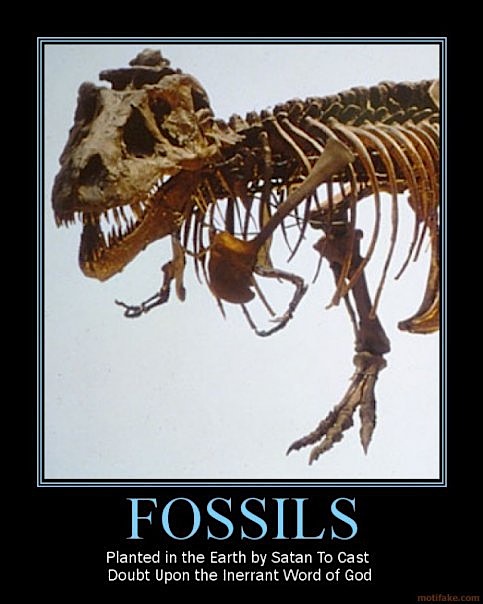


Until next time, friends, if you are the praying kind, please, just as a matter of principle, think good thoughts for my friends, the Fantastic Four.
Wednesday, December 8, 2010
WHEN LIFE HANDS YOU LENNON...
Of late, the Beatles and the late John Lennon are very much on people’s minds. People are marking the anniversary of Lennon’s death, and iTunes has just given me one of my fondest musical wishes: the ability to download any song that the Beatles recorded, as they recorded it, at will. No more settling for other people’s versions of the songs of the Fab Four, even though I actually like some of them as well as, if not better than, the originals. (Ever hear the Rockapella version of “Here Comes the Sun”? Or the David Benoit piano version of “Here, There, and Everywhere”? Or George Benson’s version of “The Long and Winding Road”? You ought to check out Arturo Sandoval’s jazz instrumental of “Blackbird” sometime. Or the Philippe Saisse Trio version of “Lady Madonna”. Or, going way back, Earth, Wind, & Fire’s rendition of “Got to Get You Into My Life”.)
 The death of John Lennon is, for me, one of those “you remember where you were” moments. I still recall the night when I was a student in art school, in bed in the apartment I had at the time, listening to jazz radio on one of the local college stations as was my custom while reading Cosmos by Dr. Carl Sagan, which I was also enjoying on Public TV. That night, a news bulletin announced that Lennon had been gunned down in the street. I was stunned. It didn’t hit me as hard as, say, the deaths of Gene Roddenberry and Jack Kirby would hit me many years later, but still...John Lennon, founder of the Beatles, shot in the back by some lunatic. It was unbelievable. Who would wish harm on John Lennon? Why?

 It was the 1970s, you understand. The legal drinking age was still 18, and even then there were ways for underage kids to get loaded. In fact, it was probably a lot easier then than it is now. Rock music was a center of gravity in young people’s lives then as it is today. And adolescence is a constant of nature. So my classmates turned on to the Beatles at a time when all this other stuff was going on. At school I would listen to the stuff that they did over the weekend and be frequently appalled. I was much more provincial and judgemental as a young person than I am today. Much more. While I had the sense that there was a lot more to the work of Lennon and McCartney and Harrison and Starr than just the hormonal imperatives and dubious morality (as I saw it then) of youth, I shied away from exploring it fully because I associated it with the things my classmates were doing. Even today, there is a period of music and a group of artists towards which I feel a lingering aversion. I’ve learned to enjoy some of the work of Sting and The Police, but I never did warm up to the likes of Elvis Costello and The Talking Heads, and I wouldn’t be caught dead listening to Devo or The Sex Pistols.
Leaving aside the fact that I hate punk rock the way J. Jonah Jameson hates Spider-Man, I don’t really have positive associations with that musical era. It reminds me too much of how isolated and alone I felt as a kid who liked to get drunk on comics and stoned on science fiction, surrounded by people who only dabbled in what I took to heart. To this day, I don’t appreciate people who dabble in comics without the commitment of real fans. I think of comic-book dabblers and I remember my classmates who thought beer and other alcohol, and later pot and mushrooms and acid and cocaine, were more important than my “drugs” of choice. And too, there’s the fact that I wasn’t Out then and wouldn’t be able to process that information about myself for some time yet, so my interest in women was purely artistic and I couldn’t share in the centrality of girl’s bodies to my classmates’ existence. All I knew was that to them, all of the above were more important than what I loved, and more important than I was.
You must understand as well that back then we didn’t have anything like the kind of culture for imaginative people that we have today. At the time, Star Wars had only just barely gotten science fiction out of the back of the bookstore; the expansion of the Star Trek franchise was in its infancy; and the media and social outlets for people who have a special imagination and like to use it--except for the initial growth of comic book specialty stores, which were like oases to me--just were not in place. If you were a dedicated fan of these things, it was very possible to find yourself alone in the wilderness. I envy today’s young comic book and science fiction fans. Their experience of young fandom is 180 degrees different from mine.
(By the way, I’m not going to be so hypocritical and deceitful as to say I never drank, never got wasted, or never went to parties. Far from it, in fact, and there are people who could tell you stories. If they did, I would have to have them hunted down and killed, but still... I was just never really the “party animal” type, that’s all.)
One interesting note that I really must slip in here: Did you know Stan Lee initially wanted to call Marvel’s original and still greatest creation “The Fabulous Four”? No kidding, everything that we know today as Marvel Comics might have been built on a flamboyantly gay epithet if then-publisher Martin Goodman had not prevailed and made Stan change it to The Fantastic Four. It’s true, and thankfully so, in my opinion. And so it fell to John and Paul and George and Ringo, who hit world culture at the same time as Reed and Sue and Johnny and Ben, to be known as “The Fab Four.” True story.

Anyway, my appreciation of the Beatles and the genuine sense of art and literature that they brought to rock music didn’t come until after I was out of school. It wasn’t until then, when I had put a little distance between myself and my student days, that I felt able to explore what I had long suspected was there in those recordings.
Back in those prehistoric days, when people still listened to music on vinyl LPs and audiocassettes--you know, when the Earth was still cooling--there was a store in my city called the Music Miser. This was a little place in a basement where you could go through a collection of LPs and rent one or two to take home with you, record whatever tracks you wanted from it, and take it back to the store when you were finished with it and get some more. The Music Miser did such a good business that the gentleman who ran it--whom I remember best for his fantastic arms--was able to open a second location. (I mean really, he liked to wear these tight T-shirts that displayed how well he had built up his arms; going in there was like going to a gun show, if you know what I mean.) Unfortunately, it also did such a good business that it attracted the attention of recording companies and artist’s representatives who weren’t collecting any royalties, and faster than you can say “Napster,” the Music Miser was shut down.
 Anyway, the longer the Beatles went on, the more artistic and literate they seemed to get, and I was captivated by their work. In time I lost my original little Beatles collection--cassettes wear down and technologies grow obsolete--and wished I could have back all the songs I had collected and things that I hadn’t gotten round to recording before the Music Miser shut down. I wished I could do it without having to spend a lot of money and time tracking down all the appropriate CDs. When I got iTunes, I made a point of collecting everything on it that I could find that I had wanted for years and years but for which I didn’t feel like buying whole albums. The thing most conspicuously lacking on iTunes was the Beatles. (Well, actually, I wish they’d also get hold of the recordings of the defunct jazz vocal quartet Rare Silk, and I’ve actually suggested that to them, to no avail.) That is, until now.
Over the last few weeks since the big announcement was made that iTunes was finally “Beatling up,” so to speak, I’ve made my list and checked it twice (to use a seasonal reference) for “J.A. Fludd’s Essential Beatles Collection.” Out of a catalog of some 200 songs, there were a very select few that I wanted, including the ones I used to have on cassette. I finally whittled it down to a core of fifteen songs. I may at some point add a few more, but the ones I’ve collected are the ones that represent to me the Beatles at their best and most beautiful. My selections may differ greatly from yours (and yours are likely much more numerous), and as I’ve said, there may be some additions at a later date. But these fifteen were my absolute “must-haves”.
“Across the Universe” and “Lady Madonna” (The Blue Album)
“Because” and “Here Comes the Sun” (Abbey Road)
“Blackbird” and “Ob-La-Di, Ob-La-Da” (The White Album)
“Do You Want to Know a Secret” (Please Please Me)
“Eleanor Rigby” and “Here, There, and Everywhere” (Revolver)
“The Fool on the Hill” and “Penny Lane” (Magical Mystery Tour)
“I’ll Follow the Sun” (Beatles for Sale)
“I’m Looking Through You” and “Nowhere Man” (Rubber Soul)
“Till There Was You” (With the Beatles)
And for the record, the official Favorite Beatles Song of J.A. Fludd is “Here Comes the Sun”. With the Beatles on iTunes, I have at last gotten something that I have wanted for a great many Christmases.
Oh, and one last thing: Sir Paul McCartney read Marvel Comics (witness the song “Magneto and Titanium Man” on one of his later Wings albums, referencing super-villains from The X-Men and Iron Man) and once invited Jack Kirby himself backstage at one of his Wings concerts, so there!
 The death of John Lennon is, for me, one of those “you remember where you were” moments. I still recall the night when I was a student in art school, in bed in the apartment I had at the time, listening to jazz radio on one of the local college stations as was my custom while reading Cosmos by Dr. Carl Sagan, which I was also enjoying on Public TV. That night, a news bulletin announced that Lennon had been gunned down in the street. I was stunned. It didn’t hit me as hard as, say, the deaths of Gene Roddenberry and Jack Kirby would hit me many years later, but still...John Lennon, founder of the Beatles, shot in the back by some lunatic. It was unbelievable. Who would wish harm on John Lennon? Why?
Only a few years earlier, when I was in high school and the breakup of the Beatles was a recent memory, there had been a renewed wave of interest in the work of the boys from Liverpool, and a lot of my classmates were getting turned on to it. We were all old enough to remember having heard the Beatles on the radio when their work was new, and I had loved the movie Yellow Submarine when it ran on CBS a couple of times. What a great little story, I thought, and good music too. (A great many years later I would have an even more profound reaction to the movie musical Across the Universe, my DVD of which I just watched again on Thanksgiving night.) I viewed the “Beatlemania revival” of the 1970s with mild interest and curiosity, but I was seeing it through the eyes of the people with whom I went to school, and that made a difference. For at the time we were all teenagers, and my classmates were, I guess, acting their age. (I should point out that I was never really that age, or I was that age only physically and chronologically, which you’ll understand a little better as I get further into this.) My classmates were into the Beatles at a time when I didn’t really have a musical fan-identity of my own and my whole perception of music came mostly from the American Top 40 radio show starring Casey Kasem. (Would you believe that’s still on? Its star is Ryan Seacrest now.) My realization that I loved jazz would not come until my senior year of high school and the following summer, and I would come to this in the midst of the death of Disco and the rise of New Wave and punk rock. My classmates would be in sync with all these developments at the same time as their tastes and proclivities opened to other things: beer and other intoxicants, drugs and getting high, girls’ bodies...
 It was the 1970s, you understand. The legal drinking age was still 18, and even then there were ways for underage kids to get loaded. In fact, it was probably a lot easier then than it is now. Rock music was a center of gravity in young people’s lives then as it is today. And adolescence is a constant of nature. So my classmates turned on to the Beatles at a time when all this other stuff was going on. At school I would listen to the stuff that they did over the weekend and be frequently appalled. I was much more provincial and judgemental as a young person than I am today. Much more. While I had the sense that there was a lot more to the work of Lennon and McCartney and Harrison and Starr than just the hormonal imperatives and dubious morality (as I saw it then) of youth, I shied away from exploring it fully because I associated it with the things my classmates were doing. Even today, there is a period of music and a group of artists towards which I feel a lingering aversion. I’ve learned to enjoy some of the work of Sting and The Police, but I never did warm up to the likes of Elvis Costello and The Talking Heads, and I wouldn’t be caught dead listening to Devo or The Sex Pistols.
 Leaving aside the fact that I hate punk rock the way J. Jonah Jameson hates Spider-Man, I don’t really have positive associations with that musical era. It reminds me too much of how isolated and alone I felt as a kid who liked to get drunk on comics and stoned on science fiction, surrounded by people who only dabbled in what I took to heart. To this day, I don’t appreciate people who dabble in comics without the commitment of real fans. I think of comic-book dabblers and I remember my classmates who thought beer and other alcohol, and later pot and mushrooms and acid and cocaine, were more important than my “drugs” of choice. And too, there’s the fact that I wasn’t Out then and wouldn’t be able to process that information about myself for some time yet, so my interest in women was purely artistic and I couldn’t share in the centrality of girl’s bodies to my classmates’ existence. All I knew was that to them, all of the above were more important than what I loved, and more important than I was.
You must understand as well that back then we didn’t have anything like the kind of culture for imaginative people that we have today. At the time, Star Wars had only just barely gotten science fiction out of the back of the bookstore; the expansion of the Star Trek franchise was in its infancy; and the media and social outlets for people who have a special imagination and like to use it--except for the initial growth of comic book specialty stores, which were like oases to me--just were not in place. If you were a dedicated fan of these things, it was very possible to find yourself alone in the wilderness. I envy today’s young comic book and science fiction fans. Their experience of young fandom is 180 degrees different from mine.
(By the way, I’m not going to be so hypocritical and deceitful as to say I never drank, never got wasted, or never went to parties. Far from it, in fact, and there are people who could tell you stories. If they did, I would have to have them hunted down and killed, but still... I was just never really the “party animal” type, that’s all.)
One interesting note that I really must slip in here: Did you know Stan Lee initially wanted to call Marvel’s original and still greatest creation “The Fabulous Four”? No kidding, everything that we know today as Marvel Comics might have been built on a flamboyantly gay epithet if then-publisher Martin Goodman had not prevailed and made Stan change it to The Fantastic Four. It’s true, and thankfully so, in my opinion. And so it fell to John and Paul and George and Ringo, who hit world culture at the same time as Reed and Sue and Johnny and Ben, to be known as “The Fab Four.” True story.

Anyway, my appreciation of the Beatles and the genuine sense of art and literature that they brought to rock music didn’t come until after I was out of school. It wasn’t until then, when I had put a little distance between myself and my student days, that I felt able to explore what I had long suspected was there in those recordings.
Back in those prehistoric days, when people still listened to music on vinyl LPs and audiocassettes--you know, when the Earth was still cooling--there was a store in my city called the Music Miser. This was a little place in a basement where you could go through a collection of LPs and rent one or two to take home with you, record whatever tracks you wanted from it, and take it back to the store when you were finished with it and get some more. The Music Miser did such a good business that the gentleman who ran it--whom I remember best for his fantastic arms--was able to open a second location. (I mean really, he liked to wear these tight T-shirts that displayed how well he had built up his arms; going in there was like going to a gun show, if you know what I mean.) Unfortunately, it also did such a good business that it attracted the attention of recording companies and artist’s representatives who weren’t collecting any royalties, and faster than you can say “Napster,” the Music Miser was shut down.
This was too bad, as the Music Miser was the physical equivalent of an “album rock” radio station where you got to keep all the goodies that you listened to. I put together my first little collection of Beatles tunes from albums that I borrowed from there. It was in this way that I truly learned to appreciate what had been my first impression of the work of the Beatles from high school and later: that they grew from their pure rock-n-roll roots into artists capable of producing work of genuine beauty and refinement, and that there was a truly literate quality about the things they did. In fact, even some of their pure rock stuff suggested that this refinement was the direction in which they were headed. The Beatles, like the Moody Blues who followed them, stood at the vanguard of what would be called “art rock,” a musical genre of distinctly British origin. (In art school, I had discovered the Moodies’ album Days of Future Passed when the guy across the dorm from me was playing it. I already knew the song “Night in White Satin,” of course, and I had heard and loved “Tuesday Afternoon,” but I never realized that these tracks were part of a concept album that was expressly about fusing rock and classical styles. I made a point of getting this album and it remains a favorite.)
 Anyway, the longer the Beatles went on, the more artistic and literate they seemed to get, and I was captivated by their work. In time I lost my original little Beatles collection--cassettes wear down and technologies grow obsolete--and wished I could have back all the songs I had collected and things that I hadn’t gotten round to recording before the Music Miser shut down. I wished I could do it without having to spend a lot of money and time tracking down all the appropriate CDs. When I got iTunes, I made a point of collecting everything on it that I could find that I had wanted for years and years but for which I didn’t feel like buying whole albums. The thing most conspicuously lacking on iTunes was the Beatles. (Well, actually, I wish they’d also get hold of the recordings of the defunct jazz vocal quartet Rare Silk, and I’ve actually suggested that to them, to no avail.) That is, until now.
 Over the last few weeks since the big announcement was made that iTunes was finally “Beatling up,” so to speak, I’ve made my list and checked it twice (to use a seasonal reference) for “J.A. Fludd’s Essential Beatles Collection.” Out of a catalog of some 200 songs, there were a very select few that I wanted, including the ones I used to have on cassette. I finally whittled it down to a core of fifteen songs. I may at some point add a few more, but the ones I’ve collected are the ones that represent to me the Beatles at their best and most beautiful. My selections may differ greatly from yours (and yours are likely much more numerous), and as I’ve said, there may be some additions at a later date. But these fifteen were my absolute “must-haves”.
“Across the Universe” and “Lady Madonna” (The Blue Album)
“Because” and “Here Comes the Sun” (Abbey Road)
“Blackbird” and “Ob-La-Di, Ob-La-Da” (The White Album)
“Do You Want to Know a Secret” (Please Please Me)
“Eleanor Rigby” and “Here, There, and Everywhere” (Revolver)
“The Fool on the Hill” and “Penny Lane” (Magical Mystery Tour)
“I’ll Follow the Sun” (Beatles for Sale)
“I’m Looking Through You” and “Nowhere Man” (Rubber Soul)
“Till There Was You” (With the Beatles)
And for the record, the official Favorite Beatles Song of J.A. Fludd is “Here Comes the Sun”. With the Beatles on iTunes, I have at last gotten something that I have wanted for a great many Christmases.
Oh, and one last thing: Sir Paul McCartney read Marvel Comics (witness the song “Magneto and Titanium Man” on one of his later Wings albums, referencing super-villains from The X-Men and Iron Man) and once invited Jack Kirby himself backstage at one of his Wings concerts, so there!
Monday, May 10, 2010
WHILE THE IRON (MAN) IS HOT
If you’d asked me to name the all-time best comic-book adaptation movie, my nominees would have been the first two Spider-Man movies...and 2008’s Iron Man.


As of this weekend, I’ve just seen Iron Man 2. Does it measure up to the first one? The conventional wisdom about these things is that once you’ve gotten the first movie and the requisite “origin” story out of the way, it frees you up to do better films and better stories. Does Iron Man 2 bear this out? Well, it’s good, but perhaps not quite that good.

Don’t get me wrong, I liked it. I think I was just expecting to be a little more impressed than I was.
Iron Man 2 continues the story of Tony Stark (Robert Downey Jr.), the super-inventor and one-man Halliburton who created a super-powered suit of armor to a) keep his injured heart beating after receiving a shrapnel wound in Afghanistan (originally Vietnam in the 1963 comic-book origin) and b) battle evil and keep the world safe from super-villainy. All the same stuff is in this movie that was in the last one, with just a different mix of ingredients (or components, if you prefer). There is, however, a different Jim “Rhodey” Rhodes, Don Cheadle replacing Terence Howard. Rhodey, as in the comic books, for reasons you’ll see, puts on a suit of armor that Tony isn’t using and becomes War Machine. A heroine is on board this time, as well: Also from the original Iron Man stories we get deadly super-spy Natasha Romanova, the Black Widow (Scarlett Johanssen). And there are naturally some different villains: From the comic books come “reimagined” versions of Whiplash and Justin Hammer.
It is to the credit of director Jon Favreau (who plays Tony’s chauffeur and pal Happy Hogan, and we’ll get to that in a minute) that they pack in all this stuff and somehow manage to screen a film that doesn’t seem overworked or overloaded. You don’t come away from Iron Man 2 feeling as if you’ve been assailed by four sequels at the same time--a neat trick that I wish the makers of Spider-Man 3 had managed to do. How exactly Favreau pulled this off, I can’t quite say except that the writing makes a difference, but gratifyingly, they did it.
For the virtues of the script, there are some drawbacks, though. The first one really goes back to the previous picture: By having Tony “come out” publicly as Iron Man at the end of the first film, they have eliminated one of the cleverest running plot devices of classic Marvel comics, namely Tony’s secret-identity ruse of letting the public believe that Iron Man was his bodyguard. I would have liked to see the movies work more with that. Instead, they went directly to Tony’s current comic-book status as a publicly known super-hero and celebrity like the Fantastic Four. Ah, well, it’s not such a big problem that it mars the picture. One of the main plots of the film concerns the Senate (led by an arrogant, obnoxious legislator played by Garry Shandling) trying to strong-arm Tony into releasing the Iron Man armor design to the military, a tale originally done in the 1960s Iron Man stories in Tales of Suspense. It’s a good and natural use of the character’s history.


The battle between Iron Man and Whiplash on a racetrack in Monaco reminded me of the intro story for another Iron Man comic-book villain, Titanium Man. Whiplash (Mickey Rourke, who I’m sorry to say has not aged well from the hunk he used to be) is not quite the same villain we know from the comics. Stan Lee and company made him a guy in a spandex costume with a whip that could cut through metal. (The comic-book Whiplash became Blacklash in the stories of David Michelinie, Bob Layton, and John Romita Jr.) In this cinema version he wears a power supply similar to that of Iron Man’s armor, and he has two whips that are actually whiplash energy bolts of ionized plasma. Oh, and he’s Russian, with a backstory that goes into Tony’s childhood and family history that I’ll let you find out for yourself. That, in and of itself, is really not so bad. The actual disappointment is our other villain, Justin Hammer.

Now, for those who don’t know the comic books, the evil financier Justin Hammer was originally a very clever invention of the aforementioned Michelinie, Layton, and Romita Jr. back in the 70s, and figured in some of the very best and most influential Iron Man stories ever done. (I mean really, these were wonderful. If you ever come across the trade paperback Iron Man: Demon in a Bottle and you don’t know these stories, READ THEM WITHOUT FAIL.) Hammer, conceived as a man probably in his 60s or older and modeled on film star Peter Cushing (the Grand Moff Tarkin in Star Wars Episode IV and a star of England’s Hammer Horror films, which is probably where the character’s name came from, now I think of it), was the guy behind the scenes of countless Marvel stories who supplied super-criminals and villains with their costumes, weaponry, and materials in exchange for a percentage of their ill-gotten gains. When the character was introduced, you wondered why no one thought of him sooner. Though evil, Hammer was well-bred, urbane, refined, sophisticated. You sort of wanted to admire him, but felt guilty about it. The cinematic Justin Hammer, as played by Sam Rockwell, is nothing like that. He’s a government contractor who helps Whiplash fake his death and then bankrolls his work to sell it to the military. Whiplash takes Hammer’s money and renews his vendetta against Tony/Iron Man. The movie Justin Hammer has none of the polish of the character from the comics. Here, Justin Hammer is nothing more than a rich, crude, conniving, avaricious jerk. It’s a wasteful rewrite of one of the best villains, and definitely the subtlest, in the Iron Man cast.
Our other heroes, War Machine and the Black Widow, are well presented. The Black Widow was originally an anti-heroine, a Communist agent who went from enemy to ally and defected. (The original Iron Man stories were Marvel’s most politicized works, steeped in the Cold War and the Vietnam conflict.) This Black Widow turns out to be an agent of SHIELD who’s been planted in the corporate hierarchy of Stark Enterprises. This occasions another appearance of Samuel Jackson as the Ultimate Marvel version of SHIELD leader Nick Fury, which I have to admit is a writing/casting decision I wish they’d made differently. These films are based, as I’ve noted, on the original, classic Marvel comics, not the revisionist Ultimate Marvel comics; their Nick Fury should be the white guy that Stan Lee and Jack Kirby created, not the black guy from the Ultimate books. It’s a bothersome inconsistency in the interpretation of the material. I’ve nothing against Samuel Jackson (or black performers getting work in movies), but if you’re going to do classic Marvel, keep it classic! The use of War Machine--a militarized version of the Iron Man design with a missile launcher mounted on his back and an overall meaner, “bad-ass” version of the armor--was inevitable. This character appeals to the visceral, blow-’em-up sensibility of adolescent and post-adolescent fans--the people who love Wolverine and the Punisher--and was going to turn up no matter what. At least Don Cheadle made him fun to watch. The showdown between the duo of Iron Man and War Machine and the armored Whiplash comes to a pleasing end that is very cleverly foreshadowed earlier in the picture. This was a nice touch.
In the original film, director Jon Favreau as Happy Hogan--one of the most important early Iron Man supporting characters--was such a throwaway character that I didn’t realize that’s who Favreau was playing until my friend Andy Mangels pointed him out. (Nice catch, Andy.) Happy gets more screen time and much better business in this sequel. But as I was watching the credits (for reasons I’ll explain momentarily), I noticed that an Iron Man character introduced by Michelinie, Layton, and Romita Jr. was in this picture--and was the same kind of throwaway that Happy was the last time. One of the Stark corporate employees in Iron Man 2 was Bambina Arbogast, Tony’s faithful and self-assertive secretary. I completely missed Mrs. Arbogast because they didn’t call enough attention to her! They did it to me again!
The personal subplot in this film deals with a complication in Tony’s condition--and his attempt to keep himself alive with technology--the solution for which, like the Whiplash story, goes back into Tony’s childhood and his relationship with his father, the Walt Disney-like Howard Stark (played on old films within the movie by John Slattery.) You’ll see for yourself what it is, but it involves Tony believing he is going to die and stepping down as CEO of Stark Enterprises, turning over the reins to assistant and girlfriend Pepper Potts (Gwyneth Paltrow). This gives Ms. Paltrow some more interesting situations to play than she had last time.
I have one other disappointment about this film, which is the same one I had about the first one. Whiplash and Justin Hammer (such as he is here) are perfectly good villains, but Iron Man’s true arch-nemesis remains missing. We need a cinematic smackdown between our Golden Avenger and the Mandarin! The Mandarin, far more than a mere super-criminal or costumed villain, is one of the world-menacing, planet-threatening, would-be conquerors of humanity who represent the highest ranks of evil-doers. He is Iron Man’s Dr. Doom. A Chinese dictator with ten super-powered alien rings, one for each finger, the Mandarin was my first experience with world-class arch-villainy. I first discovered Marvel Comics on the Marvel Super-Heroes TV show; in the Iron Man episodes, the Mandarin was the villain who actually worried me. Every time he appeared, I was afraid this was the time he was going to get our armored ace. The Iron Man movie franchise is missing its number-one villain. Now, the moderator of The Gay League, whose opinion I respect, suggests that the Mandarin has been omitted because Paramount is afraid he will bring up the old “Yellow Peril” stereotypes and offend the Asian audience. I’m not sure I completely accept this as a real possibility; a sufficiently skilled screenwriter should be able to give us a Mandarin of the requisite evil who is not an Asian caricature. We’ve had Fantastic Four movies with (a character superficially resembling) Dr. Doom; Spider-Man movies with the Green Goblin and Dr. Octopus; Superman and Batman movies with Luthor and the Joker. So we really ought to be able to have a battle between Iron Man and the Mandarin on the big screen. I still want the Mandarin!

Now, about those closing titles. I know a lot of people are inclined to walk out of the cinema and not bother to stay and listen to the ending theme, but it’s my habit to stay for them unless I really can’t stand the music. (J.A. FLUDD FACTOID: If the soundtrack for a film is by John Williams, I refuse to walk out on the closing titles. I will not walk out on John Williams!) If it is your custom to walk out on the closing titles of a movie, you really must resist it for Iron Man 2. Be patient and sit through them, because after the credits have rolled you’ll be back in the movie for a few more minutes for a scene that will set up the next Marvel movie. All I’m going to tell you about this is that if you’ve read Fantastic Four #536 and 537 and/or you know which Marvel property is being filmed even as you’re reading this, you’ll immediately get what’s going on.
Final verdict: See Iron Man 2. It’s good and you’ll have fun.
Saturday, March 20, 2010
RARE AND PRECIOUS JULES
When I was a wee lad, I borrowed a book called The Great Comic Book Heroes from the local Public Library. It was the first edition of this book, which has since been reprinted. I pored over this book with considerable fascination, as it was my first exposure to the Golden Age of Comics. As a pre-teen boy, I had no conception that there had been any such thing as a Golden Age of Comics. This is the period in the history of the medium corresponding to the end of the Great Depression through the Second World War, and it is the time when all the original archetypes of comic-book super-heroes were first coined. Superman, Batman, Wonder Woman, the Human Torch, the Sub-Mariner, Captain America, Captain Marvel (the one who yells “SHAZAM!”), Plastic Man, and the Justice Society of America (not the Justice League, the Justice Society) all first appeared during the Golden Age. So did the first iterations of the Flash, the Green Lantern, the Atom, and Hawkman. For comic books, those were critically important years.


The Great Comic Book Heroes contained reprinted examples of those formative super-hero adventures, including some of the work that came out of Timely Comics. As a matter of history, Timely Comics is the company that Marvel Comics was way back then. Timely became Atlas in the 1950s, and Atlas became Marvel in the 1960s at about the time Stan Lee and Jack Kirby created the Fantastic Four. As a pre-teen boy, I couldn’t quite grasp what I was looking at when I saw the early Sub-Mariner and the original Human Torch. For one thing, this Torch wore red and was not one of the Fantastic Four; in fact there didn’t even seem to be a Fantastic Four! (Many years later, writer Roy Thomas had Johnny Storm, the Torch of the FF, switch from the blue-and-black FF uniform design to a red-and-yellow one inspired by that of his predecessor. There are some people who have a sentimental attachment to this version of Johnny’s outfit because it was the first version to which they were exposed. I have less than positive associations with it because it was also a depressing time in the series when Reed and Susan Richards were estranged, Medusa took Sue’s place in the team and wore a similarly non-traditional FF design, and it all seemed like just another hero team, which the FF really isn’t. I was relieved when Reed and Sue reconciled and Johnny went back to the team colors.) And I didn’t understand why the art looked so strange. Compared to the art of people whose work I enjoyed in contemporaneous Marvel Comics, like Jack Kirby, John Buscema, Gene Colan, and John Romita Sr., the drawing style of some of those old comics seemed a bit cartoony. Why does the Sub-Mariner look like that? I wondered. Why were those comics drawn that way?


Nonetheless, I never forgot the experience of reading The Great Comic Book Heroes and the window that it opened for me into the comics from the time before I was born. The reason I bring it up now is that Tuesday, just three nights ago as I write this, I got to hear a speech by, and later meet and shake hands with, the author of that book: the eminent cartoonist, playwright, and screenwriter Jules Feiffer. Jules gave a lecture at The Empire State Plaza, and I made a point of attending. Perhaps it was my small way, like Martin Sloan (Gig Young) in the Twilight Zone episode “Walking Distance,” of laying a claim to a part of my youth. Regardless, on learning that Jules Feiffer was coming to town, I wanted to see him and hear what he had to say.

Jules’s talk actually began about 19 minutes late because he had given another presentation earlier in the day and the people attending had taken him to dinner, which threw off the schedule a bit. But when he did at last take the stage, he proceeded directly into a reading of three chapters of his newly published memoir, Backing Into Forward. It would have been entertaining enough just to read the book, I’m sure, but hearing the author read it made it all the more so.
The chapters that Jules excerpted for us, in comic-book terms, might have collectively been called “The Origin of Jules Feiffer”. They covered his post-college life in Greenwich Village, culminating in his start as a cartoonist for The Village Voice. The first of the chapters he read dealt with his early sex life, his friendship with girls who were his intellectual peers, and his attraction to/pursuit of girls to whom he felt physically attracted, but with whom he had nothing in common. He actually accomplished the mission, so to speak, with young women that he found physically desirable, even though the relationships never amounted to anything. Or so many people would, think, anyway; to me, the enjoyment of and communion with beauty in any form in which you perceive it is a worthy purpose unto itself. (Even if, alas, nature has selected you to be a heterosexual man.) That’s because beauty in all things happens to be one of my absolute core values. But your opinion may vary.

More interesting, at least for me, was his segue into his early professional work in art studios--or, as Jules called it, his “hack work”. To pay the bills and keep himself off the street, he would get himself jobs at art studios and artists’ bullpens where he was expected not to be unique, to do work that was essentially interchangeable with that of the other artists around him. Jules described these people as not truly creative types, but rather a lot of pencil jockeys who were more interested in building lives of middle-class comfort and raising the proverbial 2.5 kids with the wife in the suburbs than in doing anything of real “meaning”. These artistic “Men in Grey Flannel Suits” tended to find Jules vaguely amusing, and enjoyed having him around because he entertained them. Jules didn’t have it in him to be an artist and a 1950s conformist at the same time (that was the decade when he started out), so he would do as he was told, but just to a point. Past that point, he would always start inserting his own individual ideas into what his art directors assigned him to do. As it turned out, the clients of the studios that employed Jules would always enjoy Jules’s non-conforming, individual concepts and his personal sense of humor, which was how Jules was able to keep working. Do I even need to spell out the lesson in that?
Hewing to the structure of the workplace was a problem for Jules. He didn’t like having to get up at a certain time, be at the office at a certain time, and go home at a certain time every day. (Go tell it on the mountain, Jules.) When called out by his bosses, he would tell them that to come up with the ideas that the clients liked, he needed to get up earlier at home and stay later at home in the morning to do brainstorming, and then he would have to go home earlier in the day for more brainstorming. He did his best brainstorming at home. Only the fact that clients actually did like Jules’s ideas kept him from getting the sack more often, and sooner, than he did. But his jobs never lasted because in the long run he would deliberately find ways to get himself fired.
He wanted to stay in a given job for no more than six months, you see, then get himself fired and coast for six months on unemployment and use that time and that money to devote himself to work that really mattered to him. So for a while his life was a cycle of having a job for half a year and being on unemployment for half a year (and going through the demeaning interrogations at the Unemployment Office about what he was doing to find work), which he called his personal “National Endowment for the Arts”. Living in Manhattan in the 1950s before the rents went into orbit, you apparently could actually do that. Jules described his experience with a company called Chartmakers, where he got himself fired by clandestinely going to movie screenings at The Museum of Modern Art during the business day; another artist from the bullpen had been assigned to shadow him and report back. This was someone that Jules actually liked, and considering his own motives Jules found it in himself not to resent this person. But at least it got him what he wanted, and they fired him at his requisite six-month interval.
Next came his experience with book editors, who loved his work as much as everyone else did, but didn’t want to offer him a publishing deal until he was “established”. Jules found himself in the position of needing to be already famous before he could be successful. This reminds me of something that I once read about Hollywood. I forget who said this, but someone once pointed out that Hollywood is a place/industry where no one wants to be the first, but everyone falls all over themselves trying to be the second. In other words, everyone wants to wait until someone else takes a risk before accepting or trying anything. (That tumult you hear coming from California right now is that of every movie studio in town trying to make another Avatar.) This, then, is the story of creative people’s lives. People will always pat you lovingly on the head and tell you what a good little artist/writer/whatever you are, and how much they truly love and believe in what you’re doing--”and we’ll show you lavishly just how much we believe in you and shower you with rewards for what you do, just as soon as someone else does!” It’s enough to make you want to strangle someone.
Well, Jules finally got what he wanted by going to the fledgeling Village Voice shortly after its founding, and offering to do his satirical and political comic strips for them for free to gain weekly exposure throughout New York. Among those who would see his work in print--and getting all that exposure--would be the selfsame book editors who didn’t want to accept what he offered them because he wasn’t already “a name”. See what you have to put yourself through? Jules had to give it away--investing all that time, care, and effort without seeing a cent--before he could sell it! This, while keeping up with his bill-paying “hack work”! At least it did, by the end of the 1960s, start getting him the book contracts he sought, which made him a publishing celebrity and a cartooning pioneer. Many people attribute the beginnings of what we now call the graphic novel to the work that Jules Feiffer did all those decades ago.

Jules talked about some of those early strips he did. One of them in particular sounded intriguing to me. It was called Sick, Sick, Sick, and was the story of a man so compelled to conform to the society around him (remember--1950s) that he actually began to take on other people’s traits and attributes. The whole idea reminded me of that clever Woody Allen movie, Zelig. I may actually have to look this up. Every so often I like to make a foray into comics outside the milieu of super-powered people in tight costumes--you just want to go exploring sometimes--and it’s been a while since my last such adventure. These detours from my usual path have at times turned up things I’ve enjoyed, so my next detour may just be into this Feiffer creation.

After the chapter readings came the requisite Q&A session. One audience member’s question touched on the movie Carnal Knowledge, which Jules originally wrote as a stage play after an experiment in which he wrote part of the play Oh Calcutta! The story of Carnal Knowledge traces the lives of two straight male best friends from college to retirement age, and how everything about their lives changes except their attitudes towards women and sex. In reminiscing about the making of the film, Jules remarked that it was about what he called “the narcissism and misogyny” of heterosexual men, the fact that, as he put it, “straight men don’t like women, they only like the sex that goes with women”. And he actually specified straight men, acknowledging that something exists besides heterosexuality, which not everyone does. (Neil Gaiman also impressed me in the Eternals miniseries when he had Sprite observe that Sersi had had sex with “all the straight male Eternals.” Not just all the male Eternals, all the straight male ones. You can’t take such acknowledgement for granted.) Hearing this from Jules, my ears perked up, my eyes widened, and I couldn’t suppress a smile. For I remembered my own early uncloseting, and my often unkind memories of the straight male friends and classmates of my past. How many times have I thought this very thing, that gay men actually like women better than straight men do? How many times, in fact, have I wished that straight people in general could distinguish liking the opposite sex from wanting the opposite sex? Indeed, I’ve thought more times than I can count that for lack of interest in women’s bodies, relatively speaking, we are free to appreciate women as people. I had this conversation with my old classmate Sven (not his real name) when I came out to him just to shut the coke-snorting pothead dullard up about the supposed women in my life: “We like women better than you do because we don’t want anything from them,” or words to that effect. I’m not proud of this fact, but when I first met The Gaylactic Network--the organization of gay science fiction fans to which my SF group, The Alternate Universe, once belonged--I was happy to have a space in my life where there were no straight men, at least not at the time.

I should hasten to point out that I am not a true heterophobe. I temper my less charitable thoughts about straight men by remembering that the ones important in my life--my brothers, my friends--are “not like that”. The Alternate Universe did admit straight men and I did welcome them, as witness my pal Danny B. in Corinth, NY. And my comic book dealer, a guy as straight as you please, was disgruntled over California banning gay marriage at the same time as Barack Obama won the White House. As Lionel (the late Mike Evans) on All in the Family once gently chided the uncomprehending Archie Bunker, “Don’t condemn a whole group of people for the actions of a few.” But hearing my own sentiments from the lips of the heterosexual Jules Feiffer (who has a 15-year-old daughter), I just had to smile. This man gets it!
For the record, Jules Feiffer’s personal comic-artist heroes include Walt Kelly, Hal Foster, Will Eisner, and Al Capp--at least until Capp went “right-wing” in the later years of Li’l Abner. He loves the work of Frank King, artist of Gasoline Alley. He loves the original Popeye strips of Segar. (He actually wrote the screenplay for the Popeye movie starring Robin Williams and Shelly Duvall.) And he laments the careless, thoughtless throwing out and destruction of innumerable comic strips after they were initially published, depriving the world of a vast treasure of beautifully rendered panel art. (Jules Feiffer, meet a generation of comic book fans who similarly mourn the callous treatment of the original art of Jack Kirby. Somewhere I have an issue of The Village Voice with a cover story about that.)
I topped off the evening by helping myself to the refreshments while other people stood in line for the book signing outside the auditorium, then going up to Jules after everyone else had finished and introducing myself, shaking his hand, and thanking him for my boyhood experience of The Great Comic Book Heroes. Remember, I don’t like standing in lines. The last person I stood in line to see was George Perez at a San Diego Comic Con, and that was because he was doing free sketches and I hadn’t seen him in twenty years! Seriously, you’d have to be Jack Kirby or Gene Roddenberry risen from the dead to get me to stand in a line to see you. So I waited till the book-signing line was gone, and helped myself to what Archie Bunker would have called “the horses’ ovaries” (his malaprop for hors d’oeuvres) to have my moment with Jules. I’m glad I did. I’m glad I took my Tuesday night out and recorded Lost while I was gone, and spent it seeing this inventive and accomplished man who has worked so well in so many different media. And it brought one moment of my boyhood full circle.
Friday, February 12, 2010
AN OPEN LETTER TO MARVEL COMICS
I know I haven’t been posting a lot--or at all--to The Quantum Blog lately. I’ve had computer issues and other irons in the fire, which all coincided with the holidays, and I’ve just been really off my stride. I have all kinds of things that I still want to talk to you about (I’m sounding like Mister Rogers now) and I hope at some point to start catching up on them. But in the meantime, I did want to share something new about Marvel Comics. What you’re about to read below is the text of a letter that I mailed yesterday to Tom Brevoort and Joe Quesada of Marvel Comics. Quesada is Marvel’s Editor-in-Chief. Brevoort is a Group Editor responsible for all regular, main line Marvel super-hero books that are not about Spider-people and mutants. (Including the book that is the subject of the letter.) This is by way of sharing my present status as a member of the comics-reading community.
For the benefit of people who don’t read comics or have been out of the loop, a bit of a preface: About four years ago, the entire published output of regular, main line Marvel super-hero comics was consumed by a super-hero Civil War that went on for more than half a year. The cause of the Civil War was a new law requiring all super-powered people, good or evil, living on American soil to register their powers and identities with the U.S. government and make themselves effectively government operatives. (In principle, this even extended to the Fantastic Four, who are a private-sector corporation.) Captain America refused to obey the legislation, arguing (and I agreed completely) that this would give the government the authority to tell super-heroes who the villains were. Iron Man urged everyone to comply before someone was made an example. The hero community was thus divided into two camps, one falling in behind Cap, the other behind Shellhead, which set the super-heroes not against the villains of their world, but had them battling each other. Instead of fostering order, the new law violently tore the superhuman community apart. And in the wake of the Civil War, Captain America was assassinated. (This is comic books and he has a movie in the works; he got better, but wait for it.)
Since then, evil has run amok on Marvel Earth. Spider-Man’s old arch-foe, Norman Osborn (the first Green Goblin), already a corporate power broker, insinuated himself into the highest ranks of government and organized many of the other major villains--even Dr. Doom himself--into a global cabal of evil. (Osborn, in turn, has been secretly manipulated by one of his allies, Thor’s evil brother Loki, but that’s another story.) As “the Iron Patriot,” a red-white-and-blue-armored Iron Man knockoff, Osborn has banded together a group of other villains posing as heroes into a Dark Avengers, further solidifying his power. The Dark Avengers includes, in addition to the masquerading villains, a couple of other heavy hitters. One of them is the Sentry, a paranoid-schizophrenic Superman type. The other is Ares, who, like Thor and Hercules, is another god acting as a super-hero.
However, as of this winter, a miniseries called Siege is laying the groundwork for toppling Osborn and reestablishing the ascendancy of good over evil. Captain America is back (for the time being; once the dust is settled he’s giving up the role of Captain America to his World War II partner Bucky, who’s supposed to be absolutely and permanently dead--but that too is another story, and don’t get me started on that), and one of the aims of Siege is to get him, Thor, and Iron Man back on the same side and have them lead other true heroes in giving a righteous smacking down to the evil-doers who have been getting away with too much for too long.

With me so far? Okay. So, in the second of the four issues of Siege, Ares learns that he’s been on the wrong side and turns on Osborn. In response, Osborn sics the Sentry on Ares, and there’s a huge battle between the two of them. And this brings me to the letter of which I just mailed two copies to the Marvel offices in New York, the body of which I’ve copied below...
Dear Tom [Brevoort]:
I am writing this letter to express a very serious problem that I’m having with the content of Marvel Comics; specifically and most particularly, the events of the miniseries Siege issue #2.
For quite a few years now, I have felt a growing displeasure and unhappiness with the creative direction that your company’s books have taken. I have lived in varying degrees of satisfaction with the ebb and flow of good things and bad things. But as of Siege #2, enough is enough and I can’t keep quiet any more. I want to tell you in all seriousness that if I ever see another scene such as the one that occurred between the Sentry and Ares in this issue, I will immediately cease buying the book in which it appears and I will reevaluate my interest in buying all Marvel titles.
What was the need to have the Sentry actually, literally, tear Ares in two, and to have this scene rendered in lurid detail with internal organs flying across an entire double page spread? Did you or anyone in your editorial offices actually think this would make a better story, or enhance anyone’s enjoyment of it? What were you thinking, what was anyone thinking, when Brian Bendis and Olivier Coipel [the writer and artist for Siege] were permitted to present such a scene? Whom did you think would appreciate seeing such a nauseating sight? I want you to know, I did not appreciate it one bit. It was hideous, repulsive, tasteless, offensive, and uncalled for. And I want you to know further, I as part of the paying readership that supports your work am never, ever, for any reason, under any circumstances, going to tolerate such a thing one more time. Ever.

A scene like this does not reflect the Marvel Comics that I have read since the original collaboration of Stan Lee and Jack Kirby. The Marvel that I grew up reading, that made me love and believe in this medium, was about intelligence, taste, and class. It pushed the boundaries of comic-book storytelling in intelligent, tasteful ways. The thing that Marvel has become is a thing that wallows in the ugliness of life, where the standard for “heroes” is a character like Wolverine who is crude and homicidal and embodies the baser nature of humanity, and now, evidently, an organization that thinks a scene in which a character is torn open and his viscera are spewed from one page border to another makes for good entertainment. Well, Tom, you didn’t entertain me one bit with that scene. You nauseated, disgusted, and outraged me. And I repeat, if I am subjected to one more such display as this, you’re going to be in jeopardy of losing yourself a reader.

Marvel Comics has become an appallingly ugly thing; a thing that, regardless of the quality of its storytelling and art, thinks in ugly, hideous ways. I am tired of reading and looking at ugliness, and I’m not going to do it any more.
Of course, I’m just one reader. You and your organization very likely don’t care what I think. There are thousands of other fans where I come from, and many of them, I’m sure, are much more tolerant of tasteless, vulgar, needless gore than I am. And the company’s characters are its own property, to do with as it sees fit. If this is the kind of thing you want to publish for the entertainment of the comic-book-reading public, go right ahead. But do so with the knowledge that your readership will have diminished by at least one person. And if I have to go, I will make sure that every other fan I know, and my comic dealer, is made aware of the reason why.
I have tolerated a lot from Marvel over the years, but I have now reached my absolute limit. A thing like this scene in Siege #2 reflects on the mentality, taste, and class of all the parties involved, creative and editorial. I want to read comics that I can love and believe in. If I’m not going to get them from Marvel, that will be reflected in how I spend my money on Wednesday afternoons. Sicken, offend, repulse, and disgust me one more time, and I will be history--just like the Marvel Comics that I once loved. I have really had it. I am absolutely not going to take any more.
Your Editor-in-Chief will receive a copy of this letter. The ball is in your court.
Now, I’m sure you and I both know that one letter from one fan--in particular a fan like me, whose mentality and sensibilities are in no way compatible with those of the people running the company--is apt to have much the same effect on Marvel Comics as the Wasp had on Galactus when she flew into one of the eye slits of his helmet (Fantastic Four #243.) I sent that letter as a matter of principle. It is my own personal--and somewhat saner--way of throwing open my window, leaning out over the street, and screaming, “I’m as mad as hell and I’m not going to take this any more!” Brevoort and Quesada will probably not be impressed. But at least for the time it takes for that letter to be read, I will be heard.
And you may be assured that I wouldn’t have said any of the foregoing if I didn’t mean it. I don’t say things I don’t mean. Siege, we are told in Marvel’s promotions, is to be followed this spring by something called an “Age of Heroes” in which, supposedly, the balance between good and evil is restored and heroes start acting heroic again. Of this I have two things to say immediately. One: I’ll believe it when I see it, and then I’ll believe it only until some editor gets it into his head that readers aren’t paying enough attention, or some new hotshot writer or artist starts doing some other ugly, nasty, vicious, unidealistic, unheroic thing that catches on, and that will wrap it up for the much-touted “Age of Heroes”. Two: I don’t care if it’s the Age of Heroes, the Age of Dinosaurs, the Age of Aquarius, or whatever else they want to hype at us. If I ever see another tableau such as that in Siege #2, that really will wrap it up for me as a Marvel reader. In the words of Stan Lee himself, that will be the final “Excelsior!”
Subscribe to:
Posts (Atom)


 Posts
Posts

